G
Why Internal Training Fails & How a Learning Ecosystem Helps
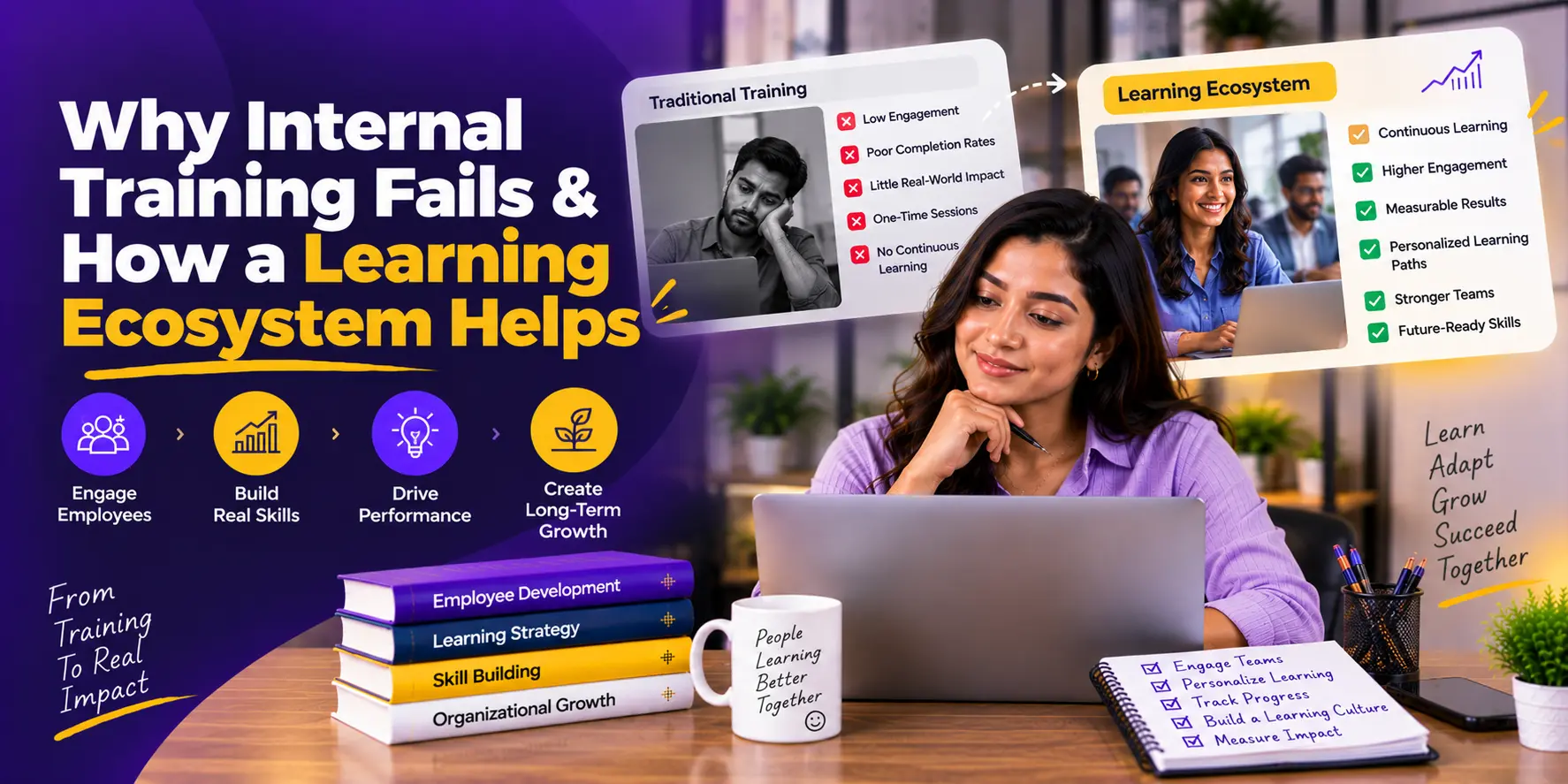
You have created training modules, arranged facilitator-led sessions, and perhaps invested in a learning management system. Yet employees are not completing their courses, teams are struggling to apply new skills, and leadership is questioning whether the training investment is delivering results.
Sound familiar?
The problem may not be your training content. It could be the way your entire learning experience is organised.
Internal training often struggles when it is treated as a one-time activity rather than an ongoing learning journey. Without the right tools, structure, engagement, and measurement, even well-designed training programmes can fall short.
A connected learning ecosystem helps businesses bring these elements together, making employee development more consistent, accessible, and measurable.
What Is a Learning Ecosystem in Employee Training?
A learning ecosystem is the combination of platforms, content, people, processes, and learning experiences that support continuous employee development within an organisation.
It can include a learning management system (LMS), online courses, live training sessions, assessments, collaborative discussions, learning resources, feedback systems, and performance reporting.
Rather than managing each activity separately, a well-designed learning ecosystem creates a more connected experience throughout the employee learning journey.
For example, a new employee might complete onboarding modules, attend a live product session, take an assessment, receive feedback, and access additional resources when needed.
This approach makes learning easier to organise while giving managers and L&D teams better visibility into employee progress.
Why Does Internal Employee Training Fail?
Internal training can struggle for several reasons: disconnected learning tools, low employee engagement, generic content, limited progress tracking, and a lack of ongoing learning opportunities.
These challenges often overlap. For example, employees may disengage because training is difficult to access, while managers may struggle to identify the problem because learning data is spread across different systems.
Let's look at five common training challenges and how a connected learning ecosystem can help address them.
1. Fragmented Tools Create a Disconnected Learning Experience
Imagine managing course content in one platform, webinars in another, employee progress in spreadsheets, and feedback through email.
Each tool may serve a purpose, but switching between them creates additional work for administrators and makes it harder for employees to follow a consistent learning journey.
Important information can become scattered, reporting takes longer, and employees may not always know where to find their next learning activity.
How an Integrated LMS Helps
An all-in-one course platform can bring relevant learning activities into a more centralised environment.
Depending on the platform's capabilities, this may include:
- Online course hosting and learning resources.
- Live sessions and webinar integration.
- Assessments and learner progress tracking.
- Course communication and feedback.
- Learning reports and analytics.
An AI-powered LMS may also support selected administrative or personalisation workflows through intelligent recommendations and automation.
Why it matters: A more connected learning environment reduces unnecessary complexity and makes training easier to manage and access.
2. Low Engagement and Lack of Accountability Reduce Training Completion
Assigning employees a mandatory training module does not automatically make them interested in completing it.
When training feels repetitive, disconnected from daily responsibilities, or difficult to fit into a busy schedule, participation can suffer.
Employees also need to understand why a course matters and how completing it will help them perform better.
How to Make Internal Training More Engaging
Businesses can introduce learning experiences that encourage participation and provide a clearer sense of progress.
- Gamification: Use badges, points, milestones, or challenges where appropriate.
- Community learning: Encourage discussions and peer-to-peer knowledge sharing.
- Regular feedback: Help employees understand their progress and areas for improvement.
- Short learning modules: Break complex topics into manageable lessons.
- Clear learning goals: Explain what employees should be able to do after training.
Gamification in learning platforms can add a sense of achievement, while collaborative activities help make training feel less isolated.
Why it matters: Engaging learning experiences can encourage participation and help employees stay connected to their development goals.
3. One-Size-Fits-All Training Does Not Meet Every Employee's Needs
A sales representative, software developer, HR manager, and customer support executive do not have identical learning requirements.
Yet many organisations deliver the same training content to employees across different roles and experience levels.
The result? Some employees find the material too basic, while others struggle because important foundational knowledge is missing.
How Personalised Learning Paths Improve Training
A smart LMS can help organisations organise learning journeys around employee roles, departments, skill levels, or development goals.
For example:
- New hires follow structured onboarding programmes.
- Sales teams access product knowledge and negotiation training.
- Managers complete leadership and communication courses.
- Technical teams receive role-specific skill development.
- Employees can access additional learning resources based on identified gaps.
Where supported, AI-assisted recommendations can help learners discover relevant resources based on their learning activity or development needs.
Why it matters: Relevant learning paths make training more useful by connecting course content with the employee's actual responsibilities.
4. Poor Training Metrics Make Improvement Difficult
How do you know whether your internal training programme is working?
If the only available information is the number of employees enrolled in a course, it is difficult to understand what learners have actually gained.
Effective training measurement requires more than attendance records. Organisations need visibility into participation, understanding, progress, and practical skill development.
Important Employee Training Metrics to Track
- Course completion rate: How many employees finish assigned training?
- Assessment scores: Are learners understanding the material?
- Learning progress: Are employees moving through their learning paths?
- Engagement patterns: Which learning activities receive participation?
- Knowledge retention: Can employees recall key information after training?
- Skill application: Are employees using what they learned at work?
- Feedback: What do learners and managers say about the programme?
Course completion tracking tools and LMS analytics dashboards can help bring these indicators together, depending on the reporting features available.
For a more complete evaluation, organisations should connect learning metrics with relevant workplace indicators and avoid treating course completion alone as proof of effectiveness.
Why it matters: Meaningful data helps L&D teams identify what needs improvement and explain training outcomes more clearly to leadership.
5. Training Stops After Onboarding Instead of Becoming a Continuous Learning Culture
Employee development should not end once onboarding is complete.
Business processes change, new technologies emerge, customer expectations evolve, and employees take on new responsibilities.
Without ongoing learning opportunities, employees may struggle to keep their knowledge and skills aligned with changing workplace needs.
How to Build a Continuous Learning Culture
A sustainable learning culture gives employees regular opportunities to develop, practise, and share knowledge.
- Schedule regular learning sessions throughout the year.
- Offer role-specific development pathways.
- Encourage peer discussions and knowledge sharing.
- Introduce practical assignments and team challenges.
- Recognise learning milestones and certifications.
- Provide access to updated learning resources.
A cohort-based learning system can also help employees learn together through structured programmes, shared milestones, discussions, and collaborative activities.
Why it matters: Continuous learning helps organisations make employee development an ongoing part of work rather than an occasional event.
What Does an Effective Internal Training Ecosystem Include?
A well-designed learning ecosystem connects the different elements employees and training teams need throughout the learning journey.
| Learning Component | Purpose |
|---|---|
| Learning Management System | Organises courses, learners, and training activities. |
| Structured Learning Paths | Guides employees through relevant training programmes. |
| Live Learning | Supports discussions, demonstrations, and facilitator-led sessions. |
| Assessments | Checks knowledge and understanding. |
| Gamification | Introduces milestones and recognition to encourage participation. |
| Community Features | Encourages collaboration and peer learning. |
| Analytics and Reporting | Provides visibility into participation and learning outcomes. |
| Automation | Helps manage reminders, notifications, and recurring activities. |
Not every organisation needs every feature from day one. The right ecosystem depends on team size, training goals, existing processes, and the learning experience employees require.
How to Improve Internal Training: A Practical Starting Plan
Building a learning ecosystem does not have to mean replacing every existing tool immediately. Start by identifying the biggest friction points in your current training process.
- Review your current training process. Identify where employees struggle to access content, complete courses, or receive feedback.
- Speak with employees and managers. Understand which training activities are useful and where additional support is needed.
- Define clear learning objectives. Connect each programme with specific knowledge, skills, or workplace behaviours.
- Choose a suitable learning platform. Evaluate course management, assessments, reporting, integrations, and engagement features against your actual requirements.
- Introduce relevant learning paths. Organise training around roles, departments, experience levels, and development needs.
- Measure participation and outcomes. Review completion, assessment performance, feedback, and practical skill application.
- Improve continuously. Use learner feedback and performance data to refine the training experience over time.
How Gyaankool Supports a More Connected Learning Experience
Managing employee development becomes more structured when learning activities and course delivery are organised through a digital learning platform.
Gyaankool helps educators, trainers, and organisations create and manage digital learning experiences. Its platform can be explored as part of a broader approach to organising courses and supporting learner engagement.
When evaluating a learning platform for internal training, consider how its available features align with your needs for course delivery, learner management, assessments, communication, and progress visibility.
Whether you are developing onboarding programmes, delivering employee upskilling, or organising structured learning experiences, the right digital platform can help bring greater consistency to your training process.
Ready to rethink your internal training? Explore Gyaankool and discover how a digital learning platform can support your organisation's learning goals.
Final Thoughts: Build a Learning Culture, Not Just a Training Programme
Successful internal training requires more than well-written modules or occasional workshops. Employees need relevant content, accessible tools, clear learning goals, ongoing support, and opportunities to apply what they learn.
A connected learning ecosystem brings these elements together and helps organisations create a more consistent employee development experience.
When training becomes part of everyday work, learning can move beyond a completion checkbox and become a meaningful part of organisational growth.
Explore Gyaankool and take the next step towards a more organised digital learning experience.